
Our daily activities usually begin by cleaning the office together before starting the day’s work. During the internship, I had the opportunity to work with Honoo-san as well as Hiromi-san, Kazu-san, Inoue-san, and Sato-san. They guided different activities and shared valuable knowledge about Sandankyo and the surrounding community.
During field visits, Honoo-san explained that about 90% of the area around Sandankyo is covered by forest. He showed me cedar trees that were planted in Japan after World War II for timber production. However, because the price of wood has fallen and fewer people now work in forestry, many forests are no longer properly managed. As a result, the trees continue to grow without being cut, and this situation has contributed to problems such as cedar pollen allergies.
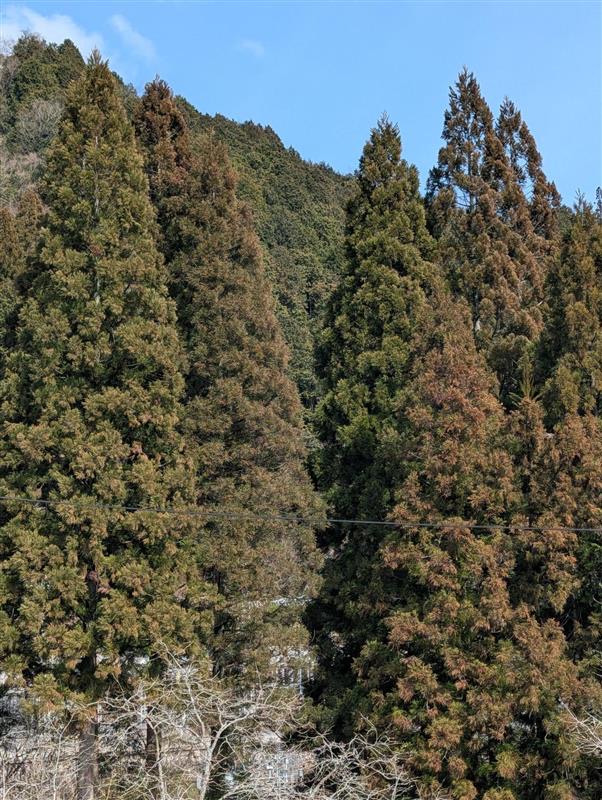
↑植林された杉
Planted cedar trees
Another memorable experience was visiting a local fish pond. The pond is carefully managed by a local man who takes care of the fish and maintains the environment around the water. Seeing how the pond is maintained helped me understand how local people manage natural resources and keep the ecosystem balanced.
We also visited a dam located near Sandankyo. From the dam, a large water pipe passes through the mountain to a facility below. According to the explanation, this system is connected to electricity generation and also helps supply drinking water for people in Hiroshima.
During the visit, Honoo-san also showed me a traditional wooden house that originally stood under the dam. After the dam was built, the house was moved to the top of the mountain so that people could still see it and remember the history of the local community. Today, the building is preserved as a small museum.
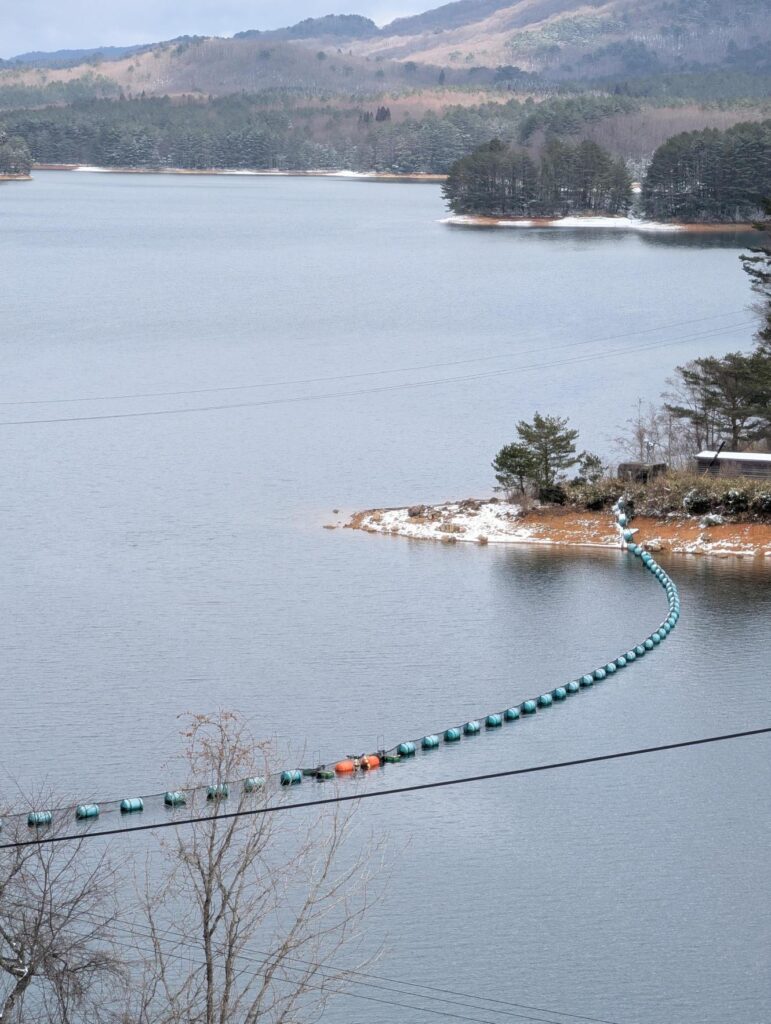
↑聖湖 Hijiri lake
We also stopped at the statue of Azuma Goto. Honoo-san explained that Azuma Goto was a leader of the local community and a friend of Kuma Nanpō, the person who introduced Sandankyo to the wider public. According to the story, Azuma Goto opposed the construction of a dam in the past because he wanted to protect Sandankyo and the surrounding town.
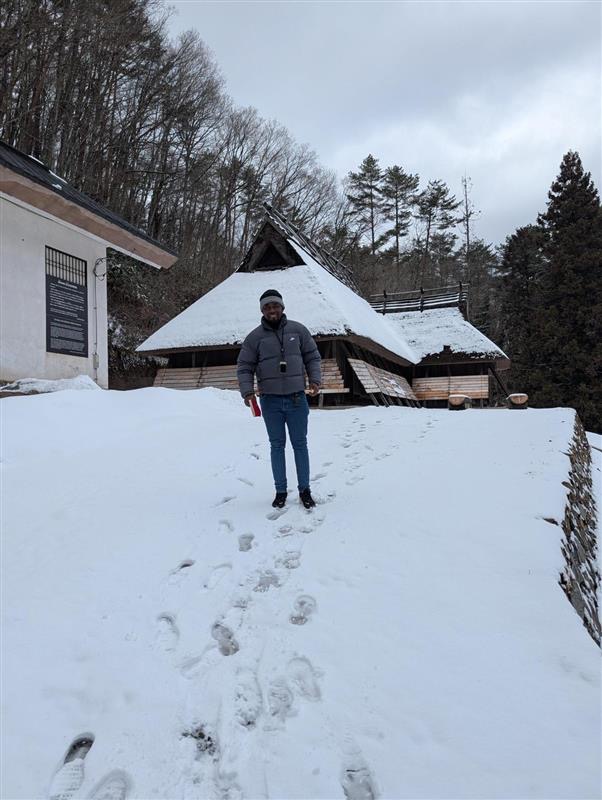
↑このブログを書いたヘンリー、聖湖に行った日は雪が積もっていた。
Henry, who wrote this blog, there was snow on the ground the day we went to Lake Saint.
During lunchtime on one of the days, we also ate Hiroshima-style okonomiyaki, which Honoo-san described as one of the best in Hiroshima.
Through these experiences, I learned that protecting Sandankyo is closely connected to the history of the community and the relationship between people and nature. This internship helped me understand that environmental protection is not only about preserving nature, but also about the people who live in and care for the area.
Written by Adimora Henry, Internship Participant.
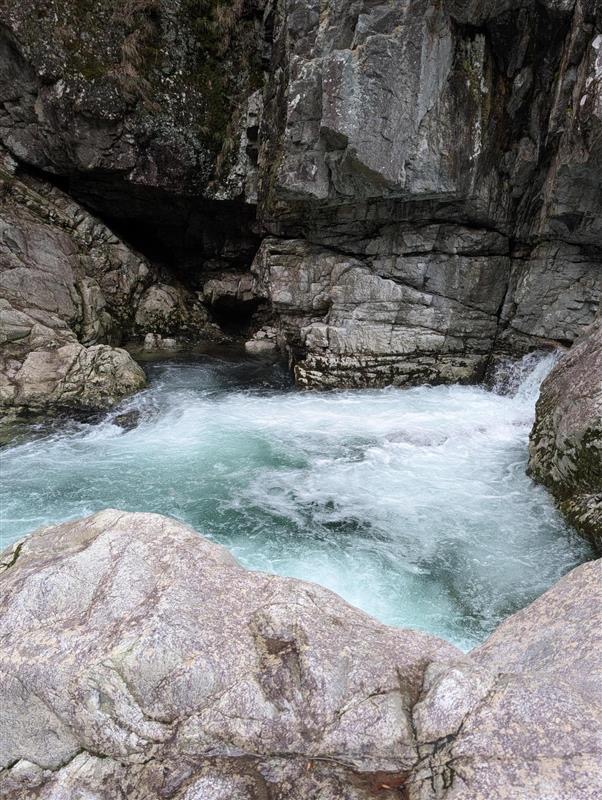
↑1日目見た三段峡の風景<三段峡 耶源>
Scenery of Sandankyo seen on the first day
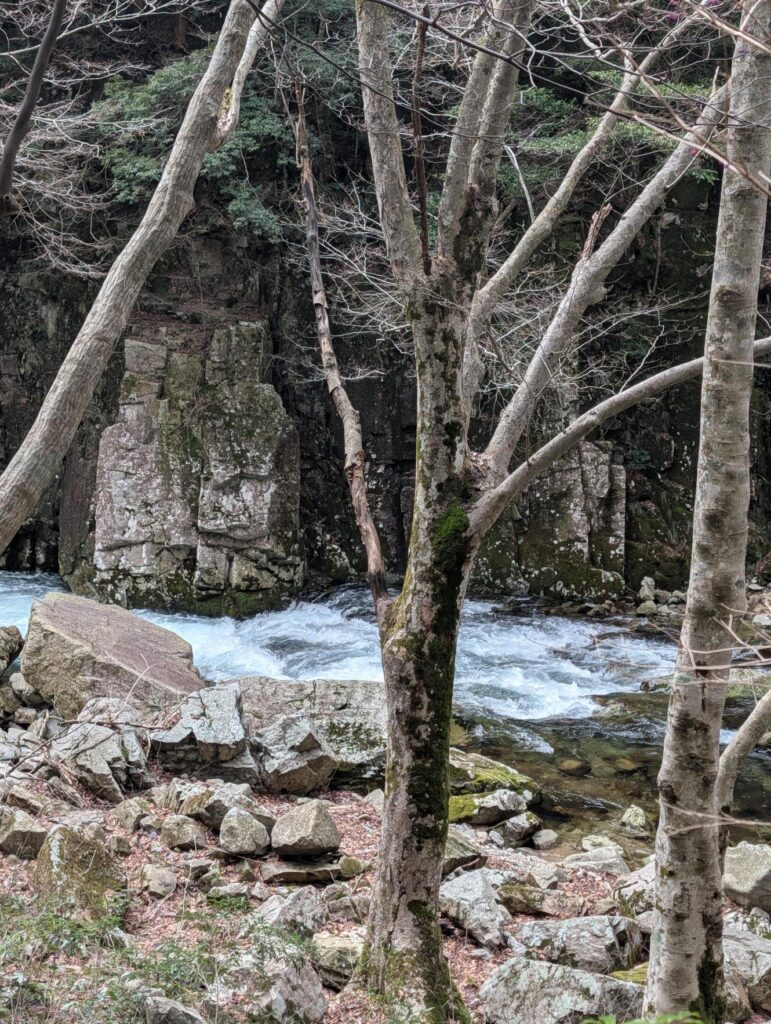
1日目に見た水梨口付近の景色①
The view around Mizunashiguchi on the first day①
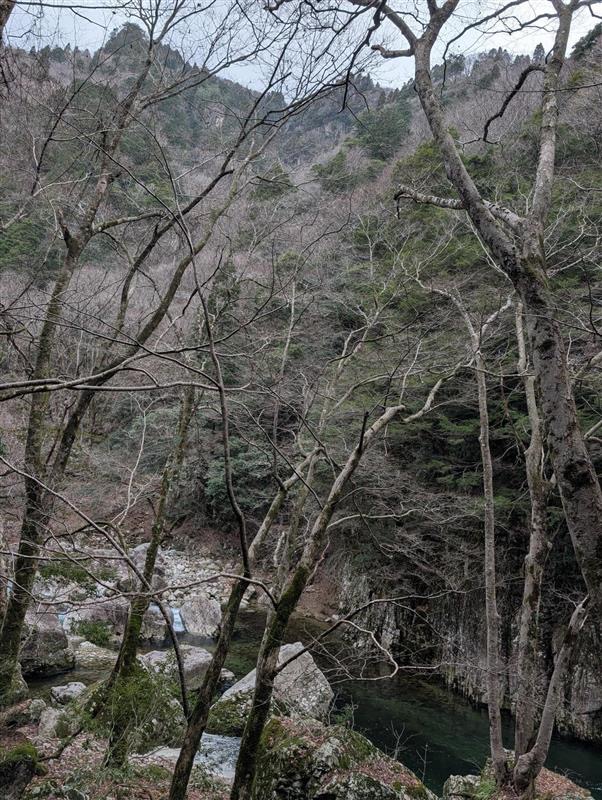
1日目に見た水梨口付近の景色②
The view around Mizunashiguchi on the first day②
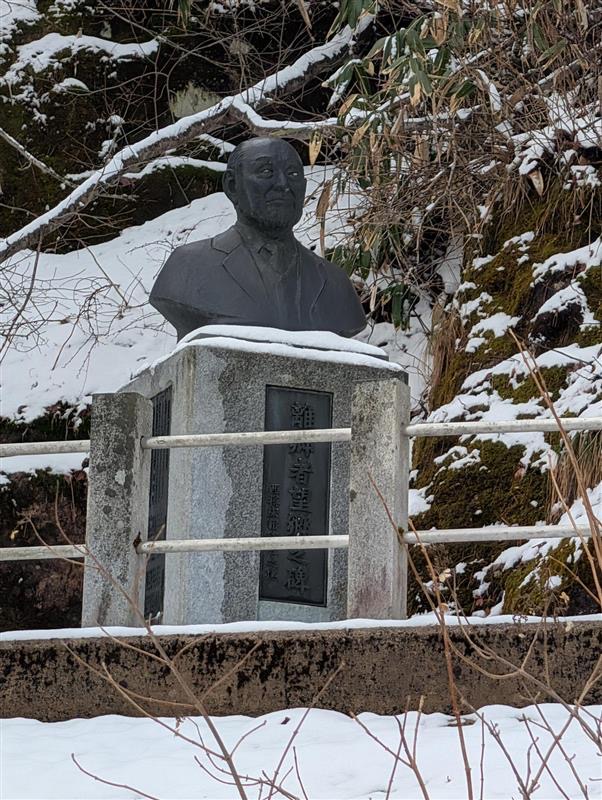
↑後藤吾妻の像 彼は三段峡の上流樽床村の出身者
Statue of Goto Azuma. He was from Tarutoko village, upstream of Sandankyo.
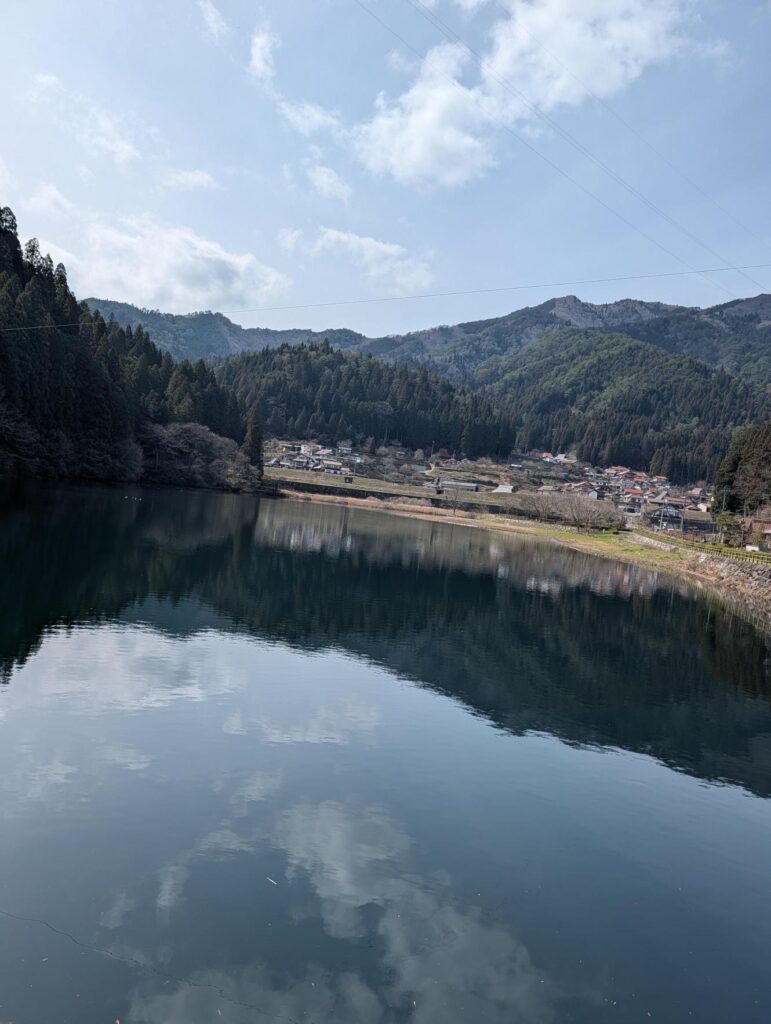
↑柴木ダム ここで貯めた水をトンネルで運び発電に使っている
Shibaki Dam: The water stored here is transported through a tunnel and used to generate electricity.
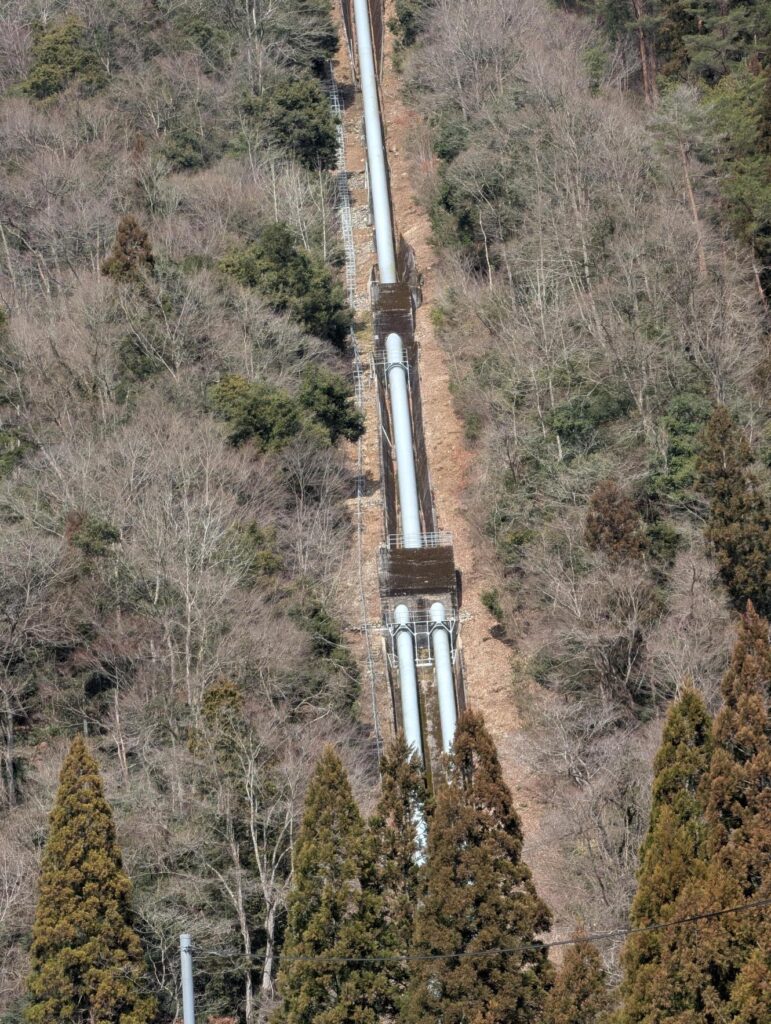
↑聖湖の水をこのトンネルを使って落下し発電している
Water from Lake Sei falls through this tunnel to generate electricity.